Rodent mechanical exclusion provides a permanent physical barrier rather than temporary chemical deterrence. While retail snap traps and poison bait boxes reduce surface rodent populations, they leave structural gaps…
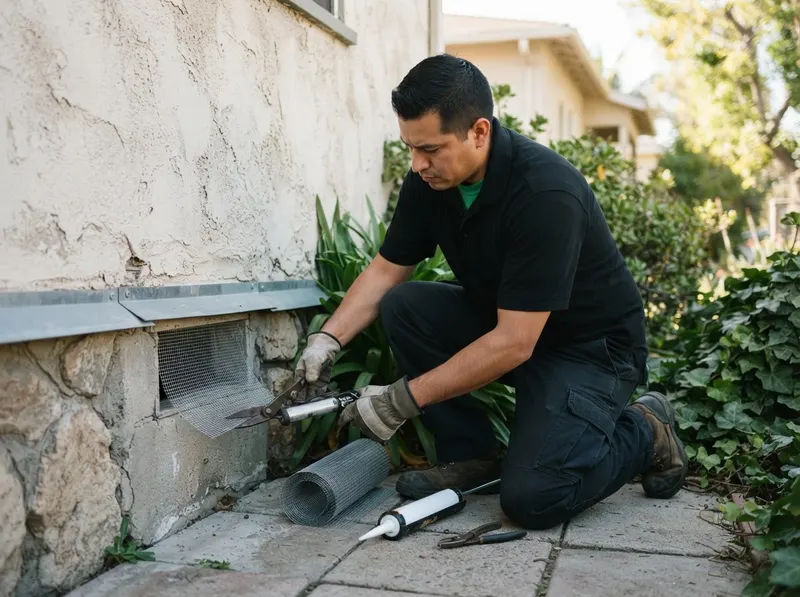
Rodent mechanical exclusion provides a permanent physical barrier rather than temporary chemical deterrence. While retail snap traps and poison bait boxes reduce surface rodent populations, they leave structural gaps open, permitting outdoor roof rats and house mice to reoccupy voids within weeks. Structural exclusion alters the envelope of the building. In historic hillside residences throughout Silver Lake and Echo Park, exterior stone foundations and aging Spanish clay roof tiles regularly harbor continuous roof rat runways. In coastal neighborhoods like Venice and Pacific Palisades, moist subfloor environments and crawlspace vents allow Norway rats easy ingress. Technicians identify and seal every aperture larger than 1/4 inch, the exact skull threshold of an adult house mouse, using 19-gauge or 16-gauge galvanized steel hardware cloth, elastomeric sealants, and custom-formed metal counter-flashing across weep screeds, roof tile junctions, and plumbing pipe penetrations.
Attic and crawlspace sanitation resolves the secondary vector risks associated with rodent occupancy. Unchecked infestations lead to heavy concentrations of aerosolized pathogen particles, Leptospira bacteria, and rodent urine pheromones that attract outside vectors. In multi-family dwellings in Koreatown and sprawling post-war properties in Sherman Oaks and North Hollywood, thermal attic spaces regularly accumulate hundreds of droppings per square yard. Technicians isolate contaminated spaces with 6-mil polyethylene containment barriers and commercial air scrubbers running 0.3-micron HEPA filtration units. Droppings and compromised cellulose or fiberglass insulation are extracted using high-vacuum negative-pressure equipment, preventing biological dust from penetrating the living area. The subflooring and framing timber are treated with an EPA-registered broad-spectrum enzymatic virucide and deodorizer to eliminate hantavirus risks and erase territorial scent trails.
The standard protocol follows three precise steps: Step 1 involves an architectural exterior envelope audit across all foundations, fascia lines, and utility risers. Step 2 executes physical mechanical seals using chew-proof hardware cloth and non-corrosive metal plates secured directly to structural framing. Step 3 carries out negative-pressure bio-waste removal, structural sanitization, and the placement of non-toxic interior diagnostic monitoring stations. For estate residences in Brentwood and classic hillside homes in Los Feliz, architectural rooflines require tailored metal contouring to maintain building aesthetics while sealing soffits against tree-dwelling rodents traveling down canopy corridors.
Every job gets a firm, written price after a free on-site visit.
Tell us about your rodent mechanical exclusion and sanitation job in Los Angeles and we'll send a clear, written quote, usually the same day.
 Nexora Pest Defense