Rodent activity in attics across Los Angeles County compromises both building envelopes and indoor respiratory environments. Roof rats (Rattus rattus) exploit overhanging branches near chaparral zones like Griffith…
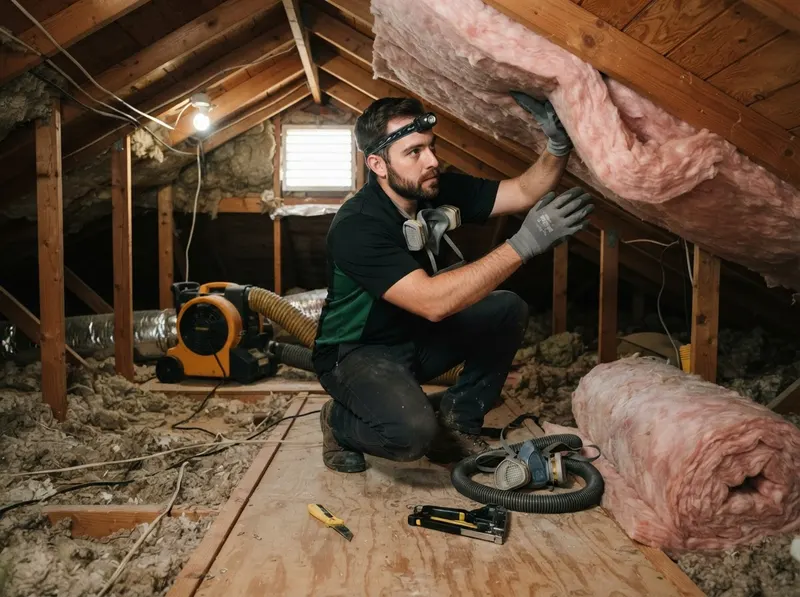
Rodent activity in attics across Los Angeles County compromises both building envelopes and indoor respiratory environments. Roof rats (Rattus rattus) exploit overhanging branches near chaparral zones like Griffith Park and Elysian Park, gnawing through eave boards, dormer vents, and fascia. Once inside, pests compress fiberglass insulation, reducing thermal resistance by up to 40% and depositing urine pheromones that draw future rodent colonies. In hillside properties from Los Feliz to Silver Lake, air circulating through crawlspaces and recessed ceiling fixtures pulls aerosolized fecal particulates directly into living areas through the stack effect. The remediation process replaces ad-hoc spraying with architectural containment, using negative-air HEPA systems that extract contaminated debris without releasing micro-particles into living spaces.
Decision-fit depends on the physical distribution of contamination. If fecal matter is confined to a 10-square-foot pocket near an isolated roof leak, targeted spot-vacuuming and a local biocide treatment preserve the surrounding sound materials. If rodent runways cross joists, or if droppings and urine permeate deeper layers throughout the attic floor, localized clearing fails because lingering pheromone pathways trigger persistent re-infestation. The operational trade-off centers on upfront remediation expense versus long-term HVAC efficiency and indoor air hygiene. Complete extraction removes the scent trails entirely, allowing technicians to mechanically block structural gaps with 1/4-inch galvanized steel mesh before installing blown-in fiberglass rated at R-30 or R-38 to lower summer heat gain across the San Fernando Valley.
Building construction across Los Angeles governs the scope of attic exclusion. Mid-century ranch homes in Sherman Oaks and North Hollywood often feature open soffit vents and unsealed HVAC chase runs that require customized sheet-metal backing. Denser multi-family structures in Koreatown and historic bungalows in Boyle Heights frequently display degraded mortar lines, roof-ridge voids, and junction separations around chimney flues. Coastal humidity in Venice and Pacific Palisades accelerates paper-faced batt degradation once rodent moisture is present, necessitating dense-pack cellulose or inorganic virgin fiberglass. The remediation sequence follows four steps: 1. Negative-air isolation and high-powered vacuum removal of contaminated insulation. 2. Enzymatic treatment to neutralize organic pheromone markers and pathogenic bacteria. 3. Mechanical exclusion of every breach exceeding 1/4 inch using steel mesh and non-shrink polyurethanes. 4. Application of fresh thermal insulation to meet regional California Energy Commission requirements.
Every job gets a firm, written price after a free on-site visit.
Tell us about your attic decontamination and thermal insulation replacement job in Los Angeles and we'll send a clear, written quote, usually the same day.
 Nexora Pest Defense