Nexora Pest Defense delivers comprehensive pest control service in Los Angeles across urban basins and hillside canyon corridors. Operating near me throughout central and coastal communities, our field teams deploy physical exclusion barriers and targeted remediation rather than surface-level pesticide applications.
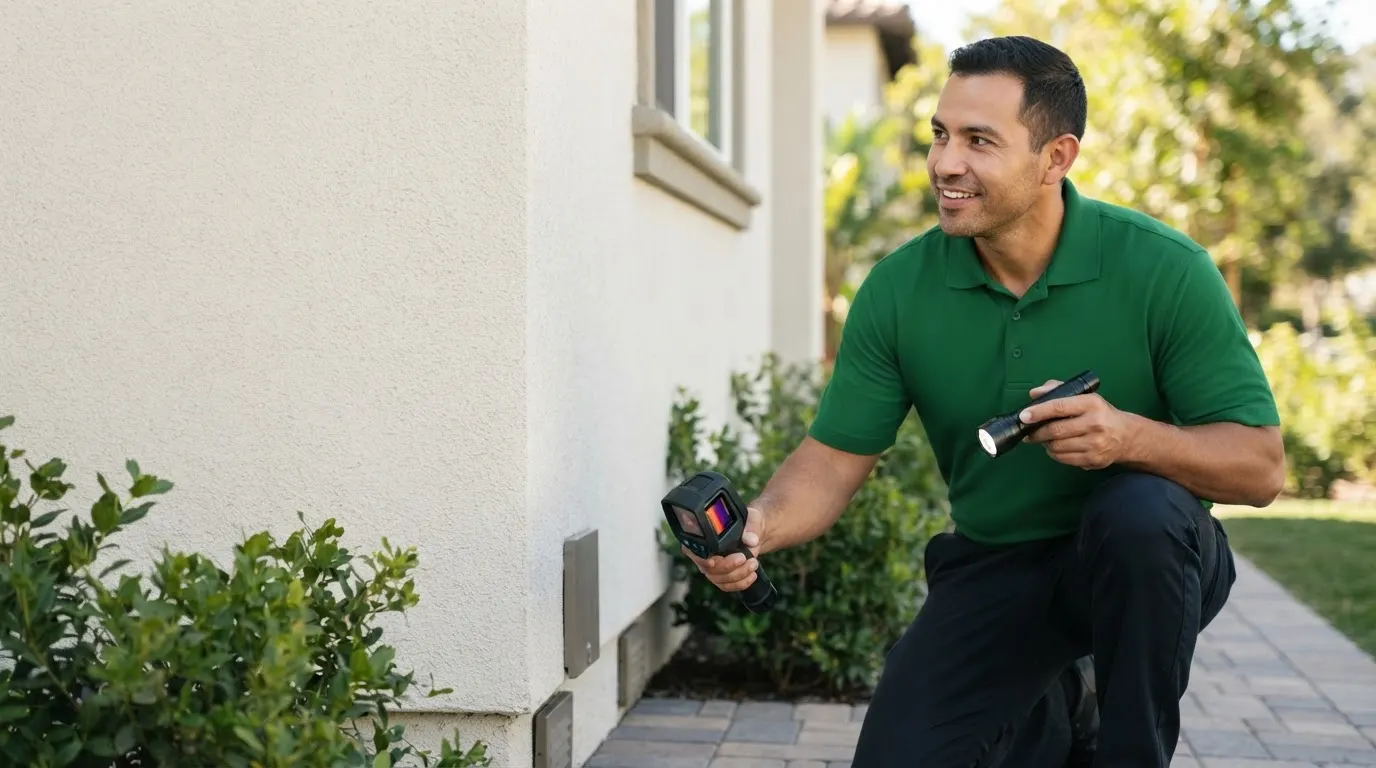
A professional pest control service in Los Angeles is an architectural and biological defense system that detects, neutralizes, and physically bars structural pests from residential and commercial properties.
Every service reflects the same meticulous attention to detail, whether it's a single job or a larger pest control sevice project across Los Angeles.

Subterranean termite soil barrier defense establishes a continuous subterranean chemical barrier along foundation footings, stem walls, and sub-slab plumbing penetrations using non-repellent liquid termiticides such as fipronil. Field technicians trench soil to depths of 6 inches and treat backfill at 4 gallons per 10 linear feet, preventing Reticulitermes hesperus colonies from constructing mud shelter tubes into wood framing members. This defensive barrier halts cellulose consumption and protects load-bearing sills from structural collapse.
Get a quote →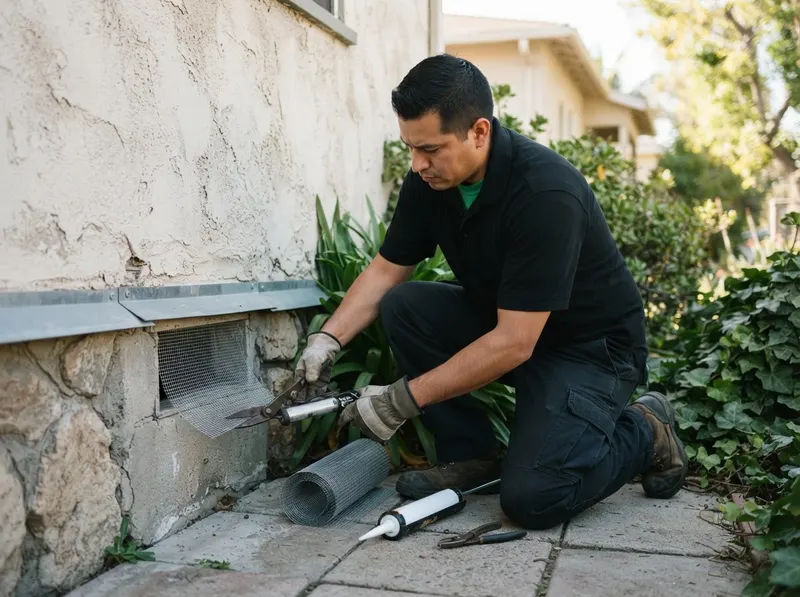
Rodent mechanical exclusion and sanitation isolates residential structures from Rattus rattus and Mus musculus by physically sealing architectural entry gaps greater than 1/4 inch with 24-gauge galvanized steel mesh, copper mesh, and elastomeric sealants. Technicians secure roof eave junctions, crawlspace vents, HVAC line chases, and foundation weep holes, followed by the extraction of soiled insulation, biohazard sanitization using antimicrobial fogging, and targeted interior mechanical trapping.
Get a quote →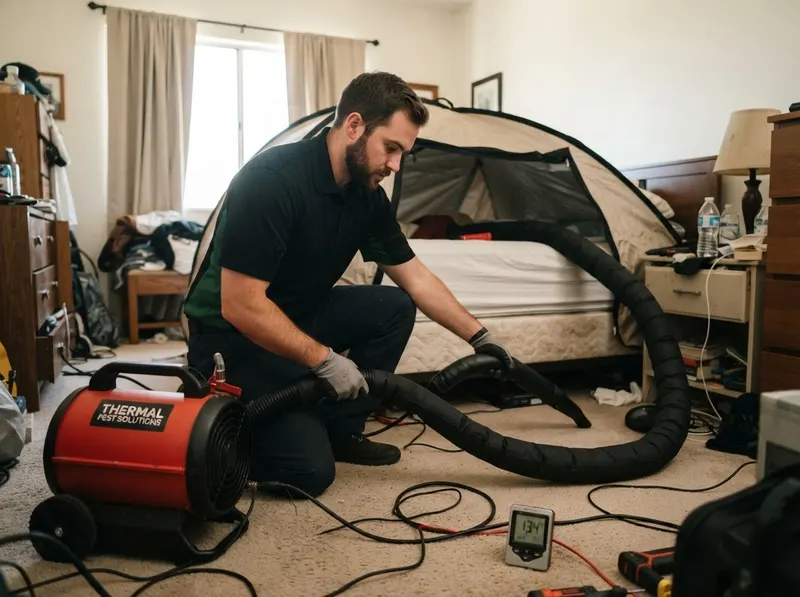
Thermal structural bed bug eradication utilizes mobile convective heating systems and high-output directional fans to elevate ambient room air temperatures between 122°F and 135°F for 4 to 8 hours. Continuous thermal monitoring verifies that heat penetrates deep within wall cavities, mattress seams, electrical outlets, and baseboards to denature the cellular proteins of Cimex lectularius at all developmental stages, including desiccation-resistant eggs, without chemical residue.
Get a quote →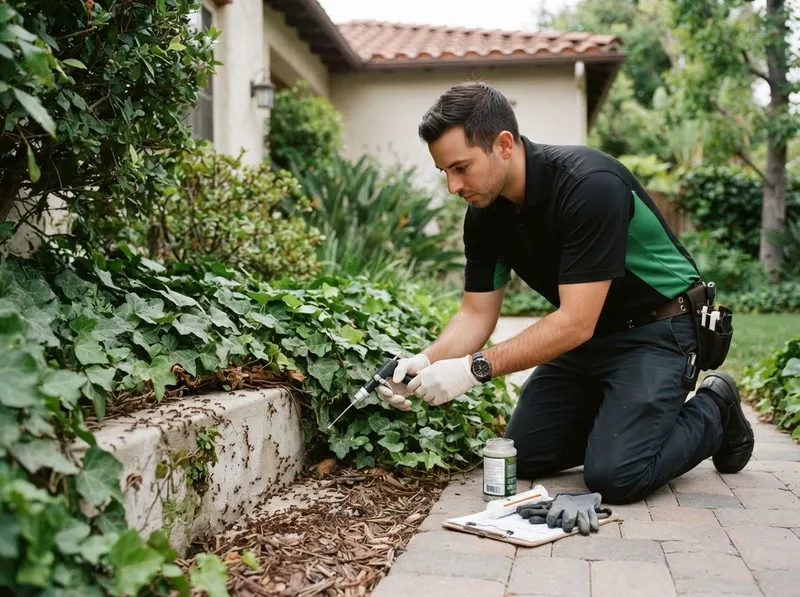
Argentine ant colony transfer treatments counter Linepithema humile supercolonies using non-repellent liquid micro-emulsions and specialized granular hydramethylnon baits applied along exterior foundation bands. Foraging worker ants walk through the active chemical deposit without detection and transport the active ingredient back into subterranean nesting galleries, feeding it to multiple reproductive queens via trophallaxis to achieve progressive colony collapse within 10 to 14 days.
Get a quote →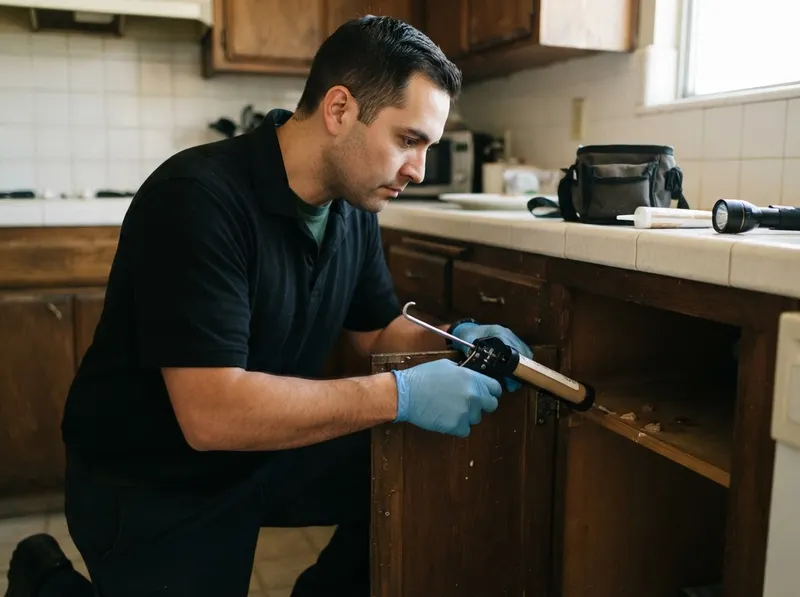
Cockroach bait matrix remediation eliminates Blattella germanica and Periplaneta americana infestations through the systematic placement of micro-gel bait formulations containing indoxacarb or abamectin alongside insect growth regulators. Formulations are injected into dark harborage zones, pipe chases, kitchen cabinetry recesses, and motor housings, preventing secondary nymphal maturation and eliminating populations through horizontal bait transfer without aerosol contamination of food surfaces.
Get a quote →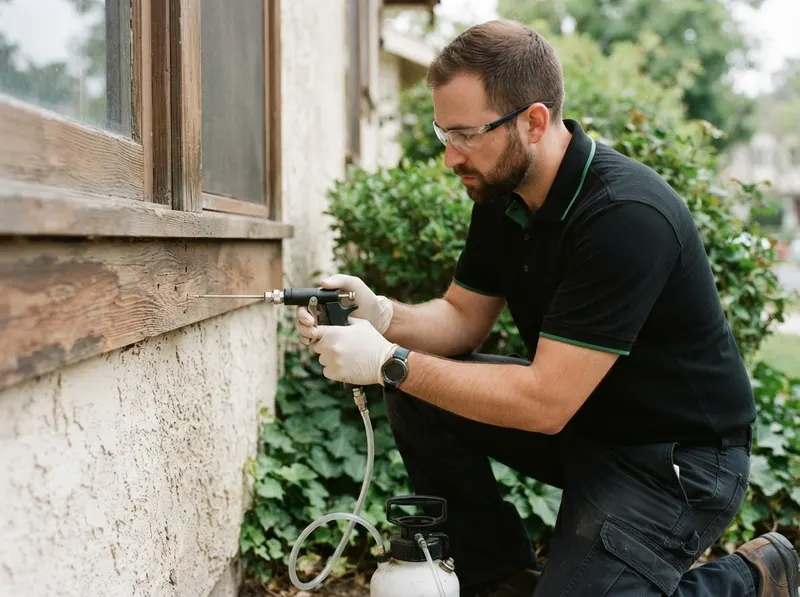
Drywood termite localized borate infusion addresses Incisitermes minor infestations in exposed roof beams, subfloor joists, window headers, and decorative rafters without chemical fumigation. Technicians locate active wood galleries using acoustic sensors, drill diagnostic 1/8-inch access channels directly into kick-out zones, and inject high-pressure disodium octaborate tetrahydrate foam that crystallizes inside wood cell structures, neutralizing wood-ingesting colonies upon contact.
Get a quote →
Exterior mosquito micro-mist suppression controls invasive Aedes aegypti and Culex pipiens mosquitoes around residential perimeters and shaded landscape microclimates. Field specialists treat dense vegetation undersides, ivy beds, and shaded overhangs with botanical micro-encapsulated formulations while applying biological Bacillus thuringiensis israelensis larvicides into standing drainage areas, arresting larval pupation and reducing biting pressure without disrupting beneficial pollinator flights.
Get a quote →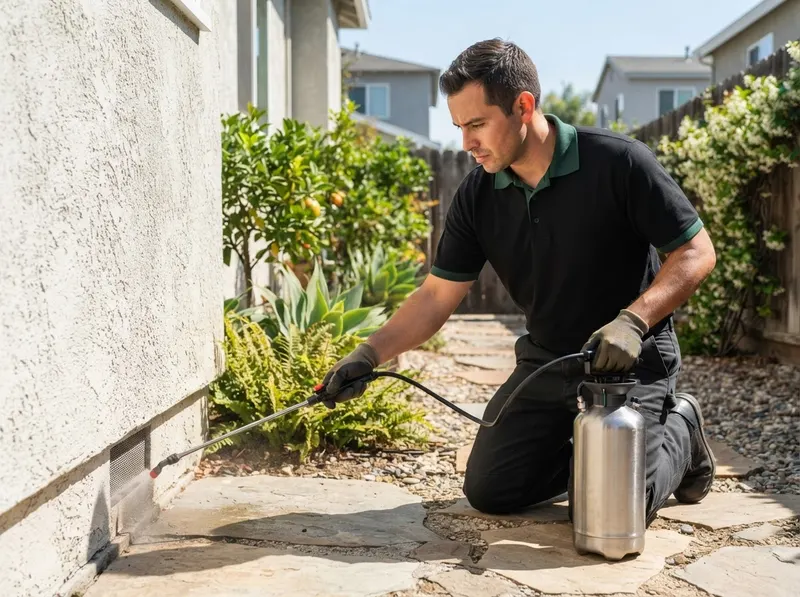
Perimeter arachnid and centipede defense establishes a targeted barrier against venomous Latrodectus hesperus (western black widow) and scavenging centipedes along foundation perimeters, retaining walls, garage thresholds, and window wells. Technicians deploy low-impact micro-crystalline pyrethroid formulations along exterior footings and mechanically sweep accessible webs and egg sacs using structural dusting wands to eliminate perimeter harborage points.
Get a quote →You get a firm, itemized quote for your pest control sevice before any work begins, no surprises, no pressure.
Careful prep, tidy work, and a full cleanup when we are done. We treat your home and belongings like our own.
The same trusted, background-checked team from the first call to the final check.
Selecting an effective pest defense protocol requires matching remediation methods directly to vector biology and the architectural framework of the structure. If subterranean termites or wood-boring beetles compromise structural framing, whole-perimeter non-repellent soil barriers or targeted pressurized borate infusions provide lasting wood preservation, whereas surface pyrethroid sprays fail entirely to penetrate load-bearing structural members. If indoor living spaces harbor Cimex lectularius bed bugs, convective heat remediation maintained at 122°F to 135°F eliminates egg cases, nymphs, and adults in a single 6 to 8 hour session; the trade-off is higher initial procedural equipment costs compared to repetitive pesticide sprays that can drive bed bugs into adjacent wall voids.
For Norway rats and roof rats, complete mechanical exclusion utilizing 24-gauge galvanized steel mesh, structural metal flashing, and biohazard sanitation permanently resolves structural colonization; reliance on exterior anticoagulant bait stations creates continuous secondary poisoning risks for predatory urban wildlife and leaves open entry points unattended. If Argentine ants establish supercolonies beneath structural concrete slabs, perimeter non-repellent transfer chemistry allows worker ants to convey micro-doses to subterranean queens without triggering panic dispersal; broadcast contact sprays, by contrast, trigger immediate colony budding that multiplies indoor invasion points across bathrooms, kitchens, and interior wall voids. For German cockroach infestations in commercial or residential kitchens, precision bait matrices featuring abamectin and insect growth regulators interrupt the reproductive cycle within 14 to 21 days; aerosol foggers merely disperse nymphs into ceiling cavities and electrical chases while contaminating exposed food preparation surfaces.
When addressing localized drywood termite colonies in rafter tails and fascia boards, direct structural injection with disodium octaborate tetrahydrate neutralizes localized feeding pockets without requiring multi-day structure tenting or chemical gas evacuation; however, properties exhibiting widespread drywood termite activity across inaccessible wall framings require comprehensive whole-structure thermal treatments or coordinated structural mitigation.
Every project gets a firm, written price after a free on-site visit. Ranges below for orientation.
Tell us about your pest control sevice job and we'll send a clear, written quote, usually the same day. Or just call and talk to a real Los Angeles pro.
(738) 203-6371
The distinct topography of Los Angeles creates microclimates ranging from damp coastal marine air along Venice and Pacific Palisades to elevated valley thermal environments throughout North Hollywood and Sherman Oaks. In coastal and foothills regions, evening moisture prompts subterranean wood-destroying insect movements, whereas the prolonged dry heat of interior corridors forces Argentine ant supercolonies and American cockroaches out of desiccated soils into municipal sewer lines and residential plumbing lines. Dense native chaparral and riparian tree corridors adjoining Griffith Park, Elysian Park, and the Sepulveda Basin Recreation Area provide natural foraging pathways for roof rats, which transition into residential attics through unsealed Spanish-tile roof barrels and open attic dormer vents. In historic urban zones including Boyle Heights, Koreatown, and Echo Park, older residential architecture featuring unreinforced masonry, porous stone foundations, and settled concrete slab perimeters presents structural fissures that grant pests direct access into wall cavities. In the elevated foothills of Los Feliz, Silver Lake, and Brentwood, complex architectural grade drops create subterranean crawlspaces with elevated relative humidity, generating optimal nesting microclimates for western subterranean termites and localized dampwood species that require physical moisture mitigation alongside structural chemical barriers.
Free estimates for Los Angeles & the surrounding area.
 Nexora Pest Defense